

This is my first project that I have attempted to do entirely on my own. The latest version is called Crypster 2.0. Previously, it was known as Coinaraidee, which was a blog website with content directly related to cryptocurrencies and had a vision to become a leader in web 3.0. It was also a hub for all types of news related to cryptocurrencies, including information on cryptocurrencies, a crypto glossary, DeFi, top trending news, and influencer rankings. Additionally, it aimed to provide users with the ability to create their own coins and hot wallets.
In the research process, I received requirements from the marketing team regarding the vision and characteristics of the website design and features they would like to have. Therefore, I started studying by investing in cryptocurrency and researching news websites from various sources. I then combined the advantages of each source to find useful features for users.
Accuracy and Credibility:Cryptocurrency news blogs often face challenges related to the accuracy and credibility of the information they provide. Given the fast-paced nature of the crypto space and the volatility of markets, there's a rush to publish news quickly. This can lead to inaccuracies, misinformation, and even fake news being spread. Readers may make critical financial decisions based on these reports, making accuracy essential. Verifying sources and fact-checking is crucial to maintain trust among readers.
Sensationalism and Bias:Another problem is the tendency toward sensationalism and biased reporting. Cryptocurrency news blogs sometimes prioritize attention-grabbing headlines and dramatic content to attract readers. This sensationalism can lead to exaggerated claims or focusing on speculative aspects of the market rather than providing well-researched analysis. Additionally, some blogs might be influenced by their own biases, either in favor of or against certain cryptocurrencies, which can affect the objectivity of their reporting.
It's important for readers of cryptocurrency news blogs to exercise critical thinking and cross-reference information from multiple reliable sources to form a well-rounded understanding of the complex and rapidly changing world of cryptocurrencies.
Implement a visual indicator that highlights articles that have been verified and come from reputable sources.
Create a clear and transparent citation format to show the sources of information for each news article.
Design templates that emphasize content hierarchy, making it easier for readers to focus on the factual information before sensational elements.
Incorporate visual storytelling techniques to present objective information without the need for overly dramatic language.
Create user settings that allow readers to customize the level of bias they're comfortable with, providing a personalized experience.
I interviewed 5 participants about their existing travel behaviors, thoughts and feelings surrounding space travel, and experiences with online applications.
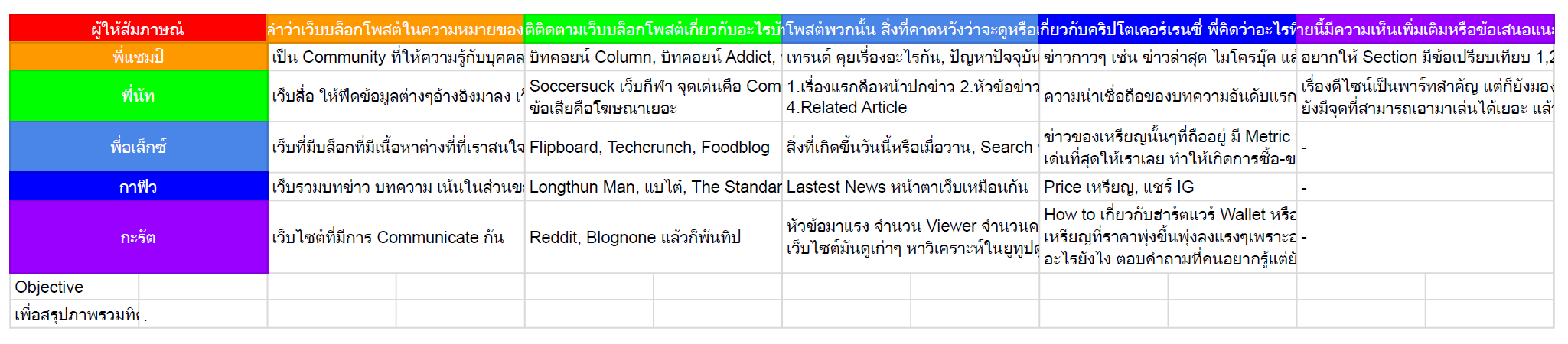
The interviewees emphasize the significance of the website's visual appeal. If the layout is disorganized, there is a high likelihood that they will exit the website. Therefore, proper organization and visual design are crucial factors for retaining user engagement.
The goal is to make the content easily readable and organize the categories systematically. In the future, there is room for further development, such as implementing wallet functionality and introducing new cryptocurrencies. This will be measured by certain metrics.
Prioritize the website's appearance and ease of use, as these are crucial for further development.
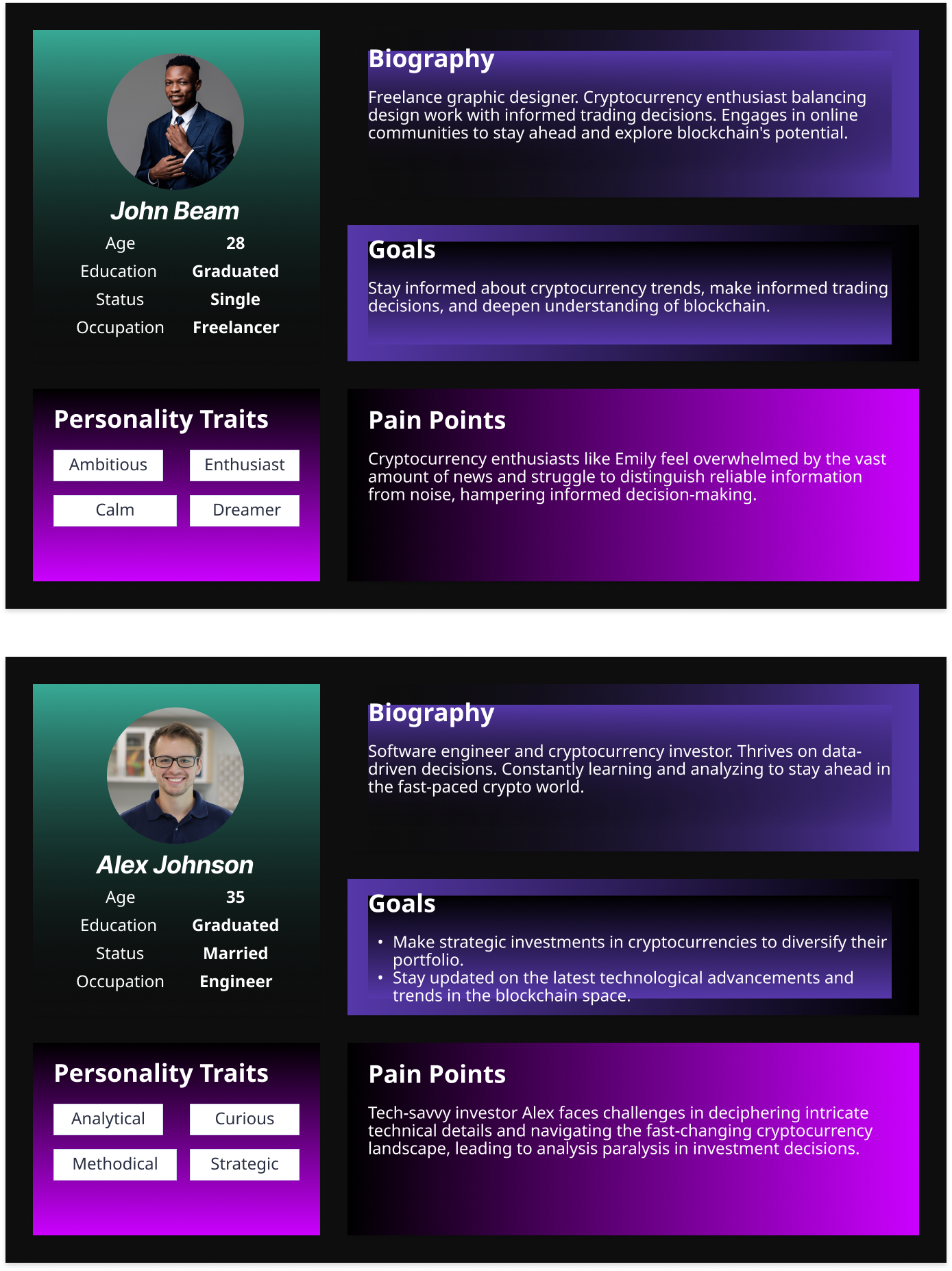
After summarizing the interview findings, I have created personas to serve as guiding references for crafting flows that cater to user needs.
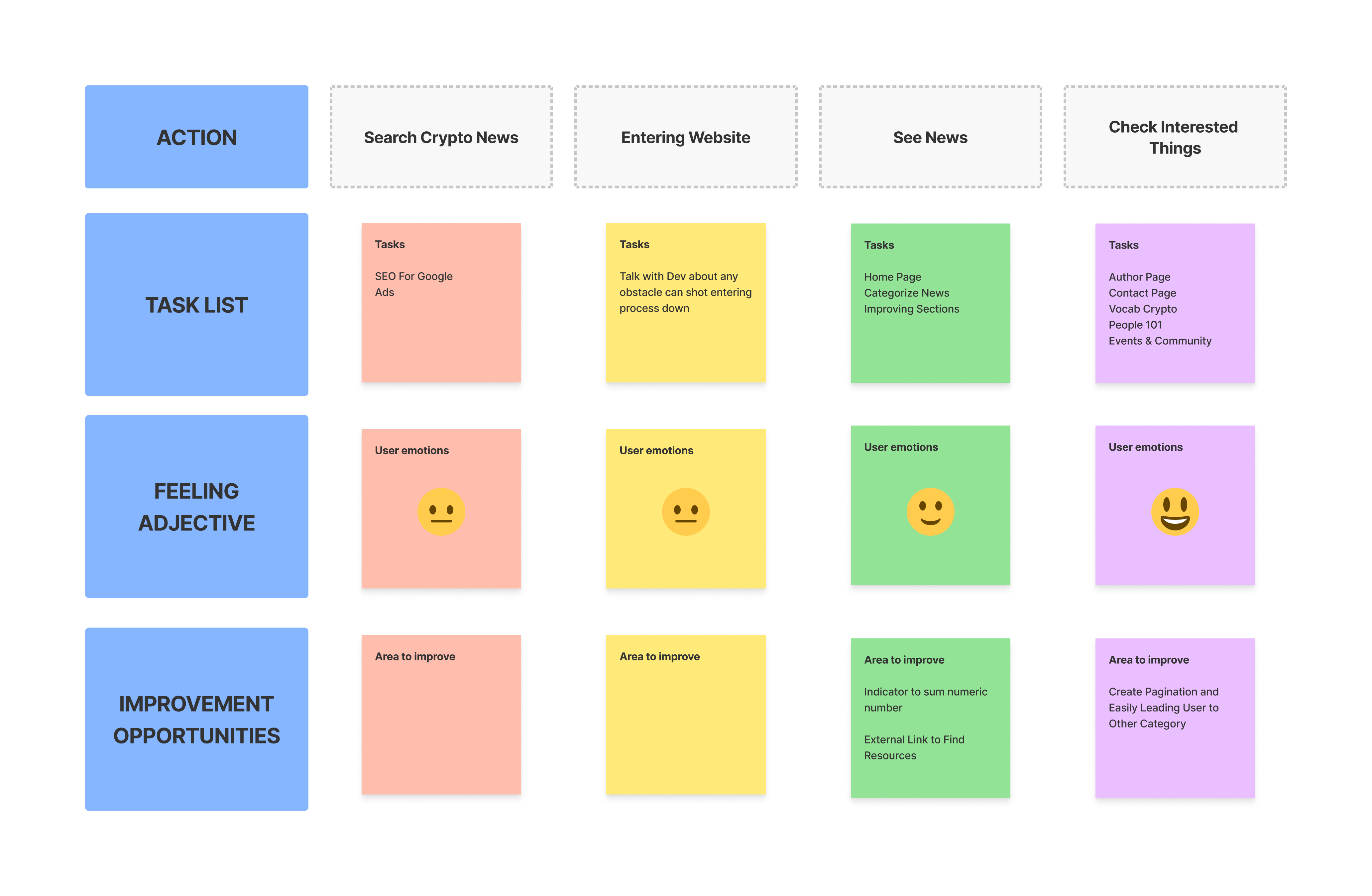
For the User Journey aspect, I have divided the scenarios into separate case studies for each User Persona. Each scenario focuses on the steps involved in initiating the usage of the cryptocurrency News. The goal is to generate user flow ideation, aiding the implementation of the design by identifying any gaps in the journey's stages.
User Entering To See What's News Is Coming From Or See What've They Got Into.
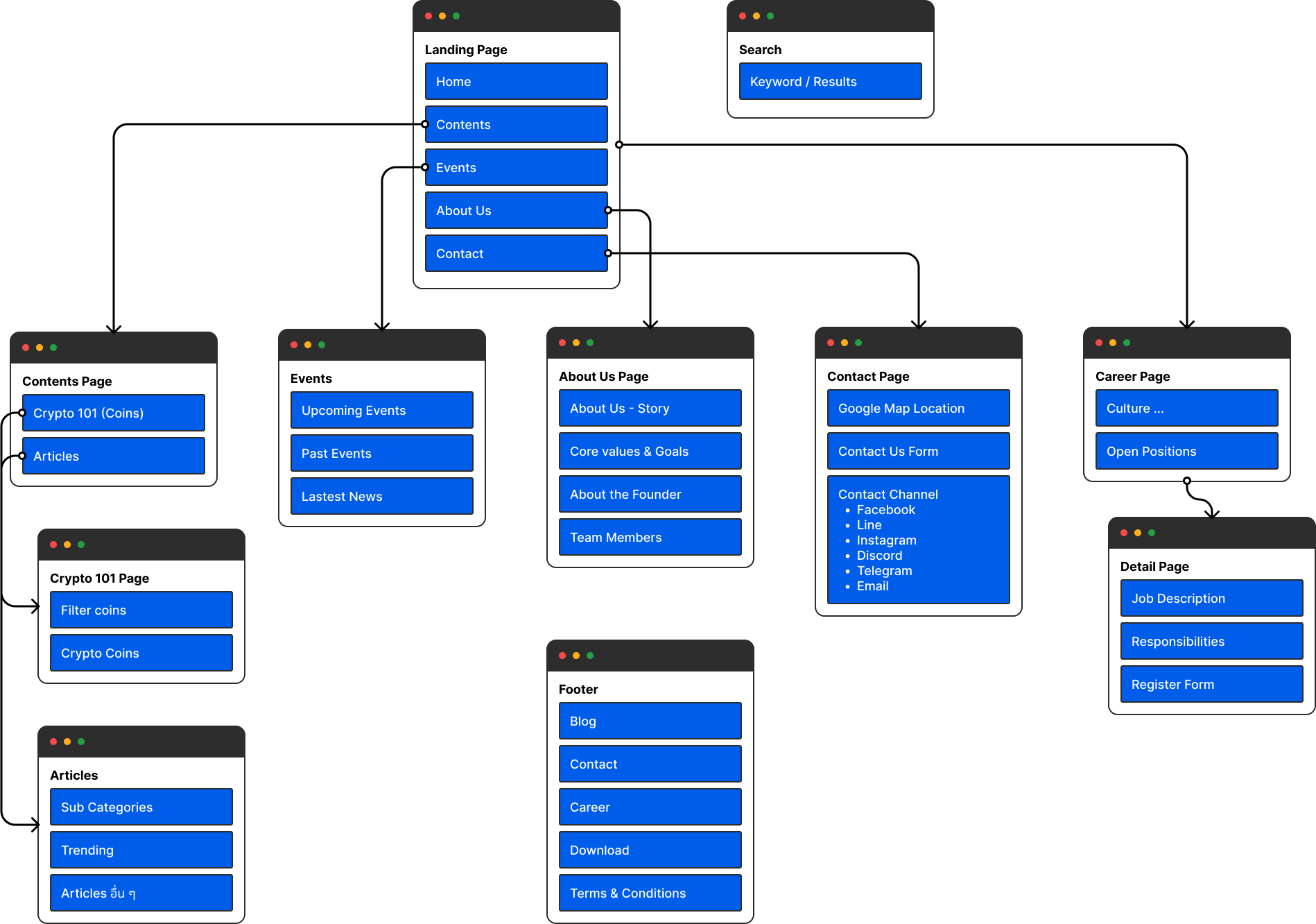
Based on my research insights and persona, I began to categorize and structure the information based on what was most useful, usable, and user-friendly.
A sitemap was created in order to visualize the layout and content of the site.
During my first time working, I made several mistakes, one of which was not backing up old data such as wireframes after designing them. As you can see in the image above, it came in the form of hi-fi 1.0 before we made the decision to redesign it as version 2.0, changing from Coinaraidee to Crypster.
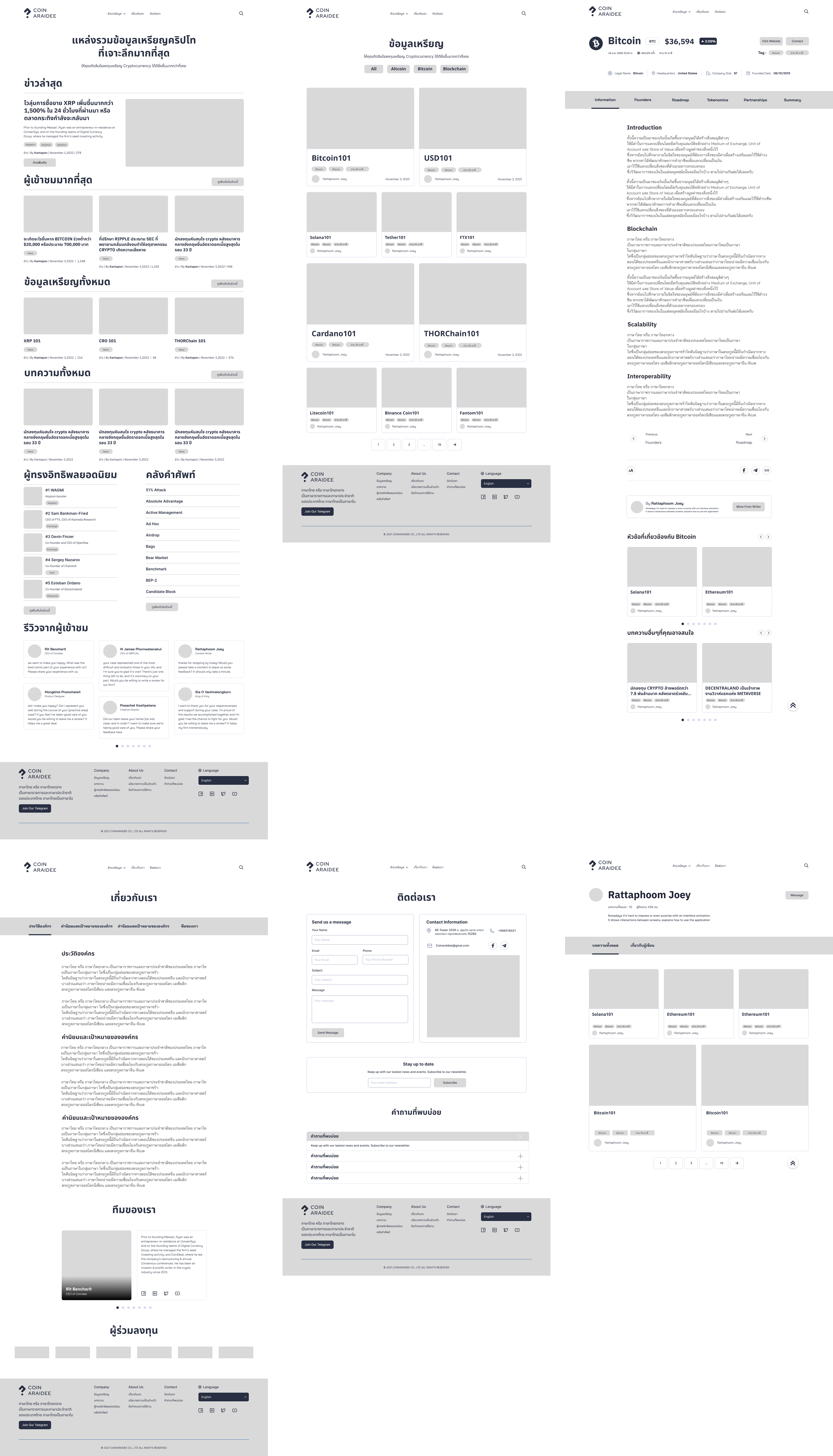
To evaluate the efficacy of the homepage and application process, I conducted usability tests on 4 participants.
hat I've gathered from user discussions is the issue of categories not aligning with user expectations. Many users tend to navigate to the wrong categories due to this mismatch.
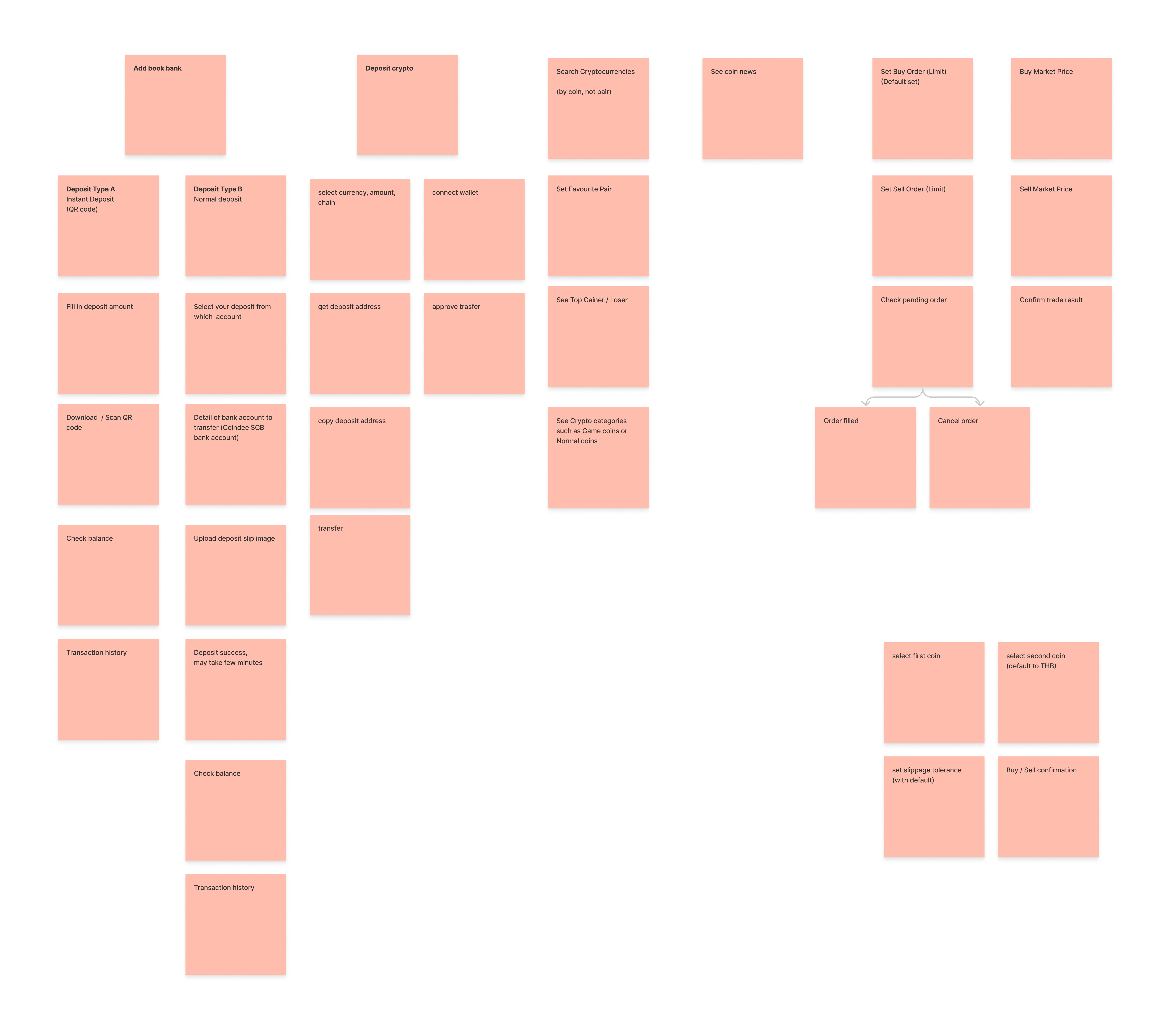
%20(1).jpg)
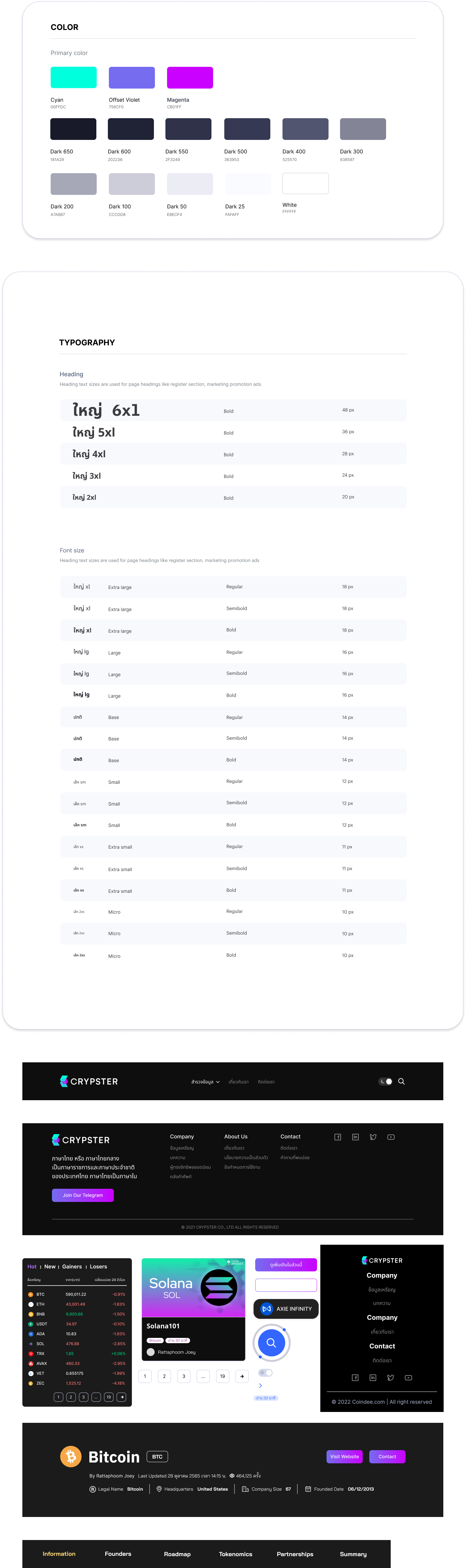
This was my first end-to-end UX design project that allowed me to gain a thorough understanding of design, research, testing, and constant iteration. I chose to do my project on a largely speculative concept in order to challenge myself to think outside of the bounds of existing information. The fact that categorize crypto enabled me to delve into the psychology of safety and risk.
This project also taught me the complexities of designing novel products that require a large level of commitment. It is only after we take the time to understand the thoughts and feelings of the user that we can effectively support them through these processes
Design is never finished, so my next steps would be: